
A Declaration that directed the fate of a Nation
Most of us have seen an image of it. Many of us learned about it in school. A good number of us could recite at least the opening lines from memory. But very few of us have ever stopped to ask: what is the Declaration of Independence, exactly? Not philosophically — we know what it stands for. But physically. Historically. As an object. As a process. As a document that had to be written, debated, revised, printed, signed, and distributed under the most extraordinary circumstances imaginable.

Declaration of Independence encasement in the National Archive Building.
In this 250th anniversary year, we thought it was worth telling that story. The real one. Because the more you know about how this document came to exist, the more remarkable it becomes.
The Committee of Five
By the spring of 1776, the thirteen colonies had been at war with Great Britain for over a year. The question of independence — whether to formally declare it — had been building like a storm. On June 10th of that year, the Second Continental Congress appointed a committee of five delegates to draft a formal statement making the case for separation.
Those five men were Thomas Jefferson of Virginia, John Adams of Massachusetts, Benjamin Franklin of Pennsylvania, Robert R. Livingston of New York, and Roger Sherman of Connecticut. Five brilliant minds. Five men who understood what was at stake. Adams, a leading proponent of independence, pushed to have the thirty-three-year-old Jefferson take the pen. Jefferson, by his own account, turned to neither book nor pamphlet. He drew from philosophy, from principle, and from what he called an expression of "the American mind."
He began writing on June 11th. He was largely finished by June 28th. Seventeen days to write one of the most consequential documents in human history.
Delegates, Divisions, Debates, and Drafts
Jefferson's earliest known fragment — called the "Composition Draft" — was discovered in 1947 tucked inside his papers at the Library of Congress. It had lain there unrecognized for over 170 years. Prior to that discovery, historians knew only of the "Rough Draft," the working document Jefferson shared with Adams and Franklin, who made corrections and suggestions in the margins. Jefferson then created clean copies incorporating their changes.

The congressional debate and editing of the final draft of the Declaration of Independence in 1776
When the draft was finally presented to the full Congress, the real editing began. Over two days — July 3rd and most of July 4th — delegates debated, argued, and made eighty-six alterations to Jefferson's text. Jefferson sat in quiet agony watching his words being changed. Franklin, seated beside him, tried to lighten the mood with a story. Congress deleted roughly one-fifth of the original draft, including an entire passage condemning the slave trade — a politically impossible inclusion that would have fractured the southern colonies' support.
Finally, in the afternoon of July 4th, 1776, the Declaration of Independence was adopted.
Who Signed It? When? And At What Cost?
Here is where history gets interesting, and where most people's understanding of the story falls short.
On July 4th, 1776, only two men signed the Declaration: John Hancock, President of the Continental Congress, and Charles Thomson, the Secretary — and Thomson's signature does not even appear on the famous engrossed parchment copy most people picture. The July 4th version was a printed document, not the hand-signed parchment we know today. Hancock's bold signature and Thomson's attestation authorized it for distribution. That was it.
In the end, fifty-six men put their names to the document. Fifty-six men who knew, as Hancock reportedly said, "There must be no pulling different ways; we must all hang together," and as Benjamin Franklin then cleverly replied, "Yes, we must, indeed, all hang together, or most assuredly we shall all hang separately."
On July 19th, Congress ordered that the Declaration be formally engrossed — that is, copied in a large, elegant hand — on parchment, with a new official title: "The unanimous Declaration of the thirteen united States of America." That task fell to Timothy Matlack, an assistant to Thomson, whose penmanship became the handwriting of history.

John Hancock's signature, once bold and prominent, as it exists today on the original Declaration of Independence — faded and barely readable.
On August 2nd, 1776 — nearly a month after adoption — John Hancock signed the engrossed parchment copy with the bold, oversized signature that has defined his legacy. Most of the other delegates signed that same day. A handful signed later — some as late as 1781.
In the end, fifty-six men — after whom our 1776 Signer™ watch strap sets are named — put their names to the document. Fifty-six men who knew, as Hancock reportedly said, "There must be no pulling different ways; we must all hang together," and as Benjamin Franklin then cleverly replied, "Yes, we must, indeed, all hang together, or most assuredly we shall all hang separately."
The Physical Document
The engrossed Declaration of Independence was written on parchment — specifically, animal skin treated with lime and stretched to create a durable, long-lasting writing surface. This was not paper. This was a material built to last centuries, and it has.
[The Declaration of Independence] is maintained under the most exacting archival conditions possible: carefully controlled temperature, humidity, and light. It is, in every sense, a national treasure.
The original measures approximately 24 by 30 inches — roughly the size of a large architectural drawing. It is a substantial, imposing object. The kind of thing that, when you stand before it, commands a certain silence.
Today, the original parchment Declaration — faded and worn from years of handling, rolling, unrolling, and imperfect storage — is housed in the Rotunda for the Charters of Freedom at the National Archives Building in Washington, D.C., alongside the Constitution and the Bill of Rights. It is maintained under the most exacting archival conditions possible: carefully controlled temperature, humidity, and light. It is, in every sense, a national treasure.

The original Declaration of Independence, faded from age and imperfect storage
Interestingly, when conservators removed the Declaration from its display case in 2001, they discovered two lines of handwritten text on the back along the bottom edge. And no — it was not some arcane cipher of carefully concealed clues leading to a secretly stashed cache of ancient gold and priceless documents collected throughout time. Though I'll confess, I'm a die-hard Benjamin Gates fan.
No, it was something far more human — a simple label: "Original Declaration of Independence dated 4th. July 1776." Written so it could be read when the document was rolled up for transport and storage. Even the most significant document in American history needed a note on the back so no one would misplace it.

How It Was Published and Distributed
The moment Congress adopted the Declaration on July 4th, the approved text was rushed to the nearby Philadelphia print shop of John Dunlap — an Irish immigrant who served as official printer to the Continental Congress. Working through the night of July 4th and into the early morning of July 5th, Dunlap printed an estimated 200 copies. These became known as the Dunlap Broadsides.
They were printed on single sheets of paper, approximately 17 to 20 inches tall and 12 to 16 inches wide — large enough to be read aloud in a public square, which is exactly what they were designed for. On July 5th, copies were dispatched to state assemblies, conventions, committees of safety, and the commanding officers of Continental troops. George Washington received a copy and ordered it read aloud to his soldiers on July 9th.
The news traveled fast. By July 18th, twenty-four newspapers had reprinted the Declaration using the Dunlap broadside as their source. It spread through the colonies like fire.
Of the estimated 200 Dunlap Broadsides printed that night, only 26 are known to survive today. They are among the most valuable documents in existence. When one last sold at auction, it brought over eight million dollars.
The words of fifty-six men, printed on a sheet of paper smaller than a modern movie poster, announced the birth of the greatest nation on earth.

A Replica Worth Holding
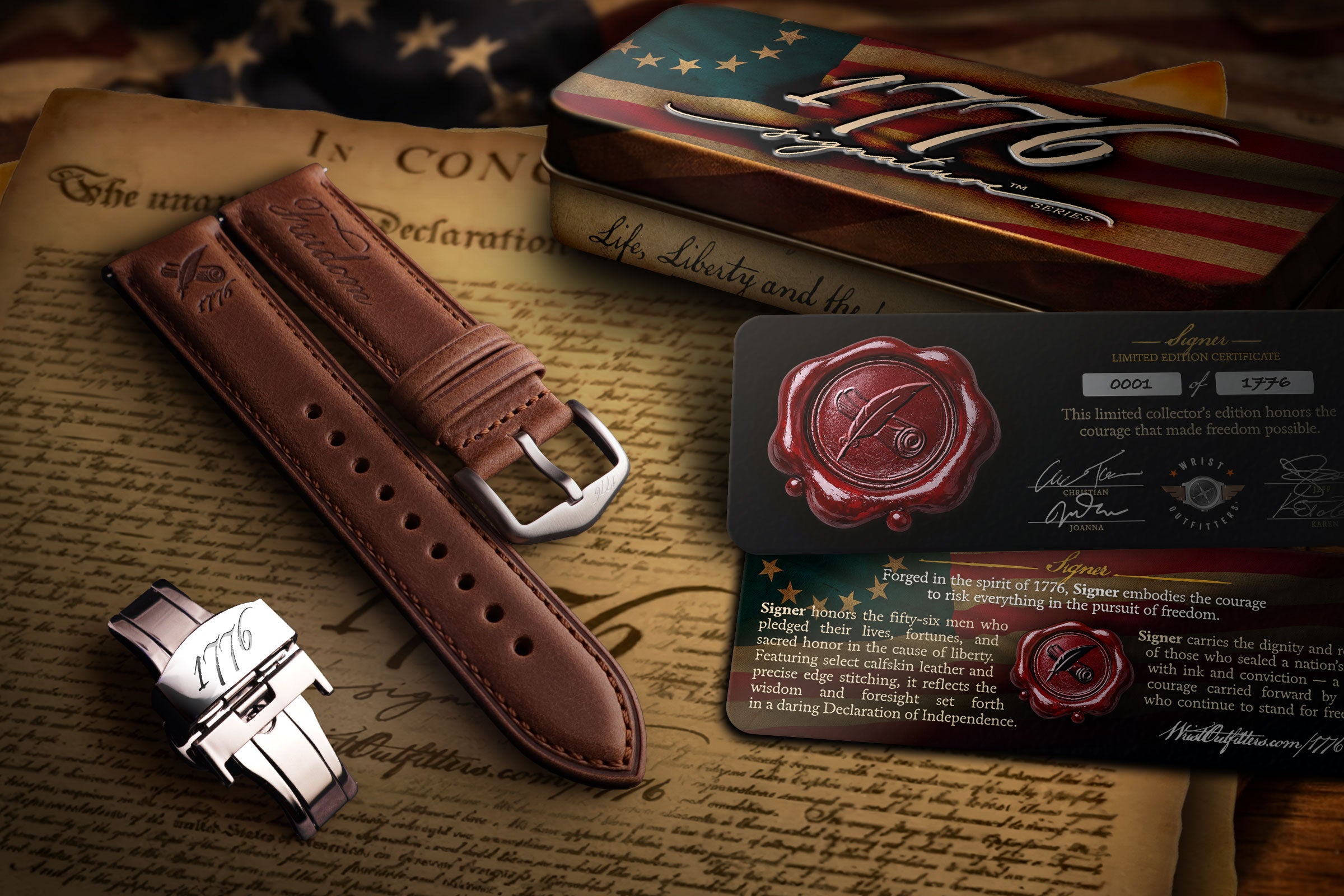
We have been thinking about this document — its history, its weight, its meaning — since we first began designing the 1776 Signature™ Series. And we knew from the beginning that the collector's experience had to honor it in a way that went beyond a watch strap, however fine.
That is why every 1776 Signature™ Series Collector's Set includes something we are genuinely proud of: a Declaration of Independence replica polishing cloth.

It is not a novelty. It is not an afterthought tucked into the packaging. It is a beautifully rendered replica of the Declaration, printed on a premium microfiber cloth that is both functional and displayable. The kind of thing you hold in your hands and feel the history in. It is sized to be used — for keeping your watch crystal clean, your strap conditioned, your lenses clear — and it is designed to be kept. We think about legacy in everything we make, and this cloth is no exception.
...every generation that has inherited this republic has had to decide, again, whether those words mean what they say. Whether the promise made in Philadelphia in the summer of 1776 is still worth keeping.
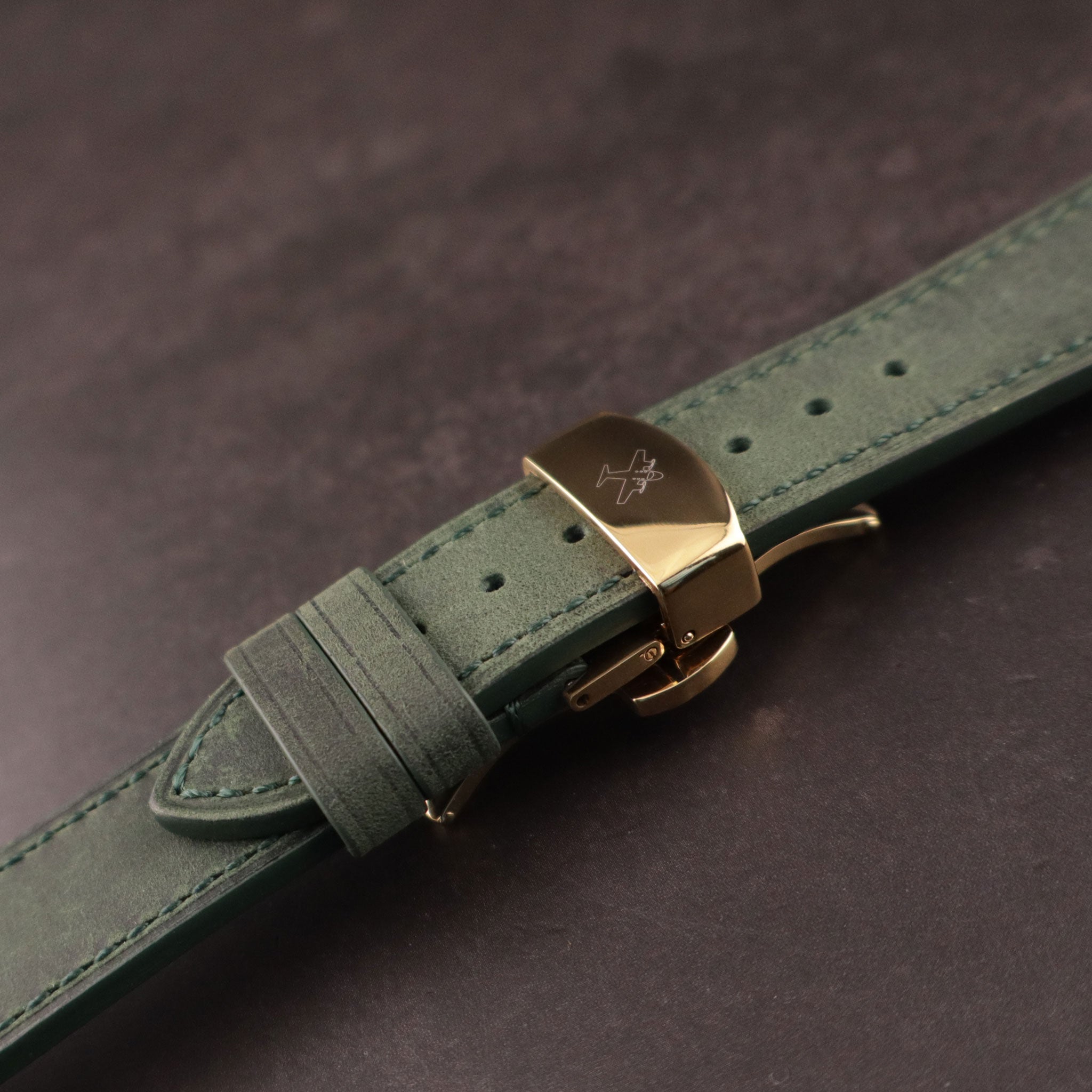
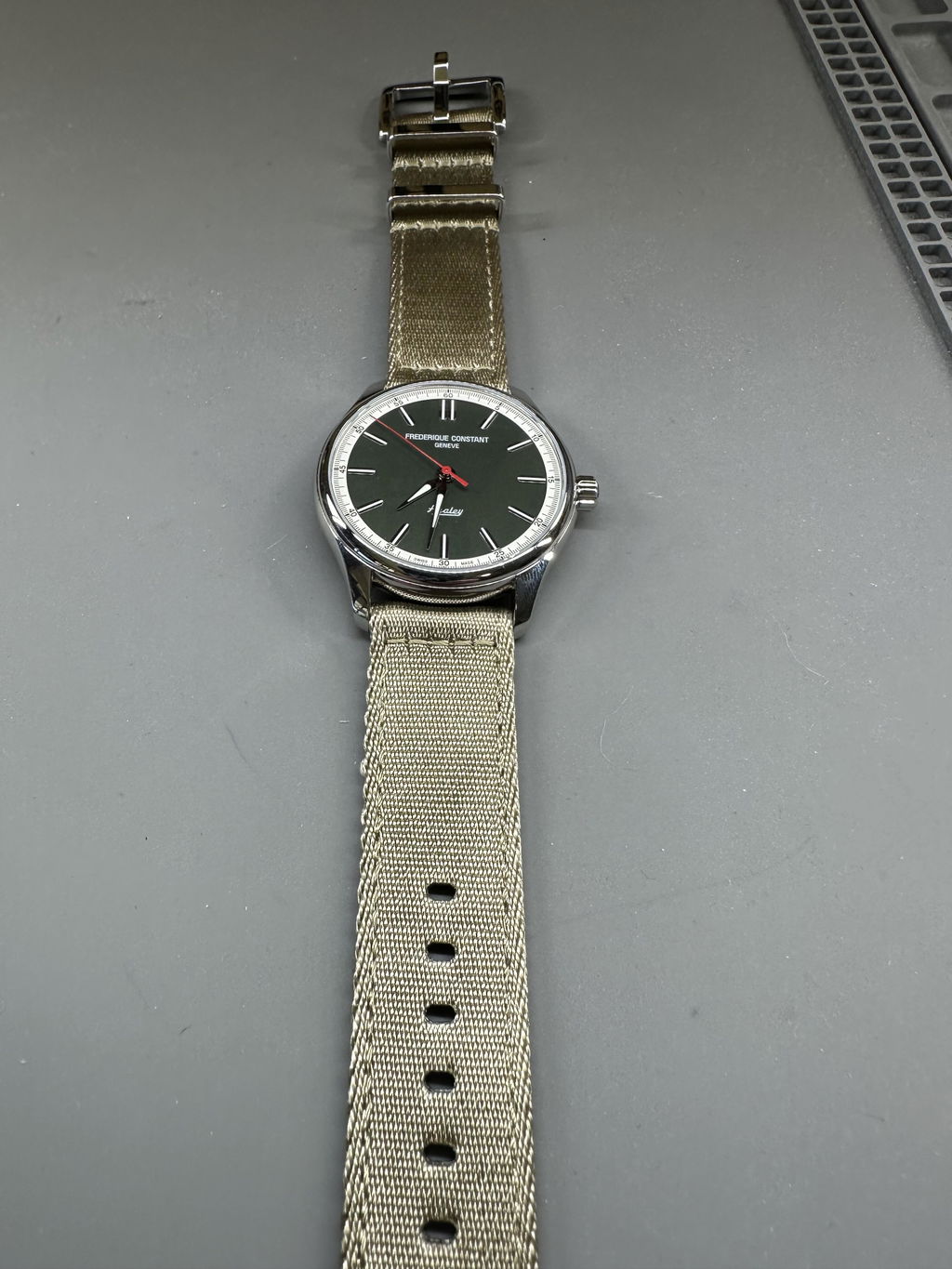
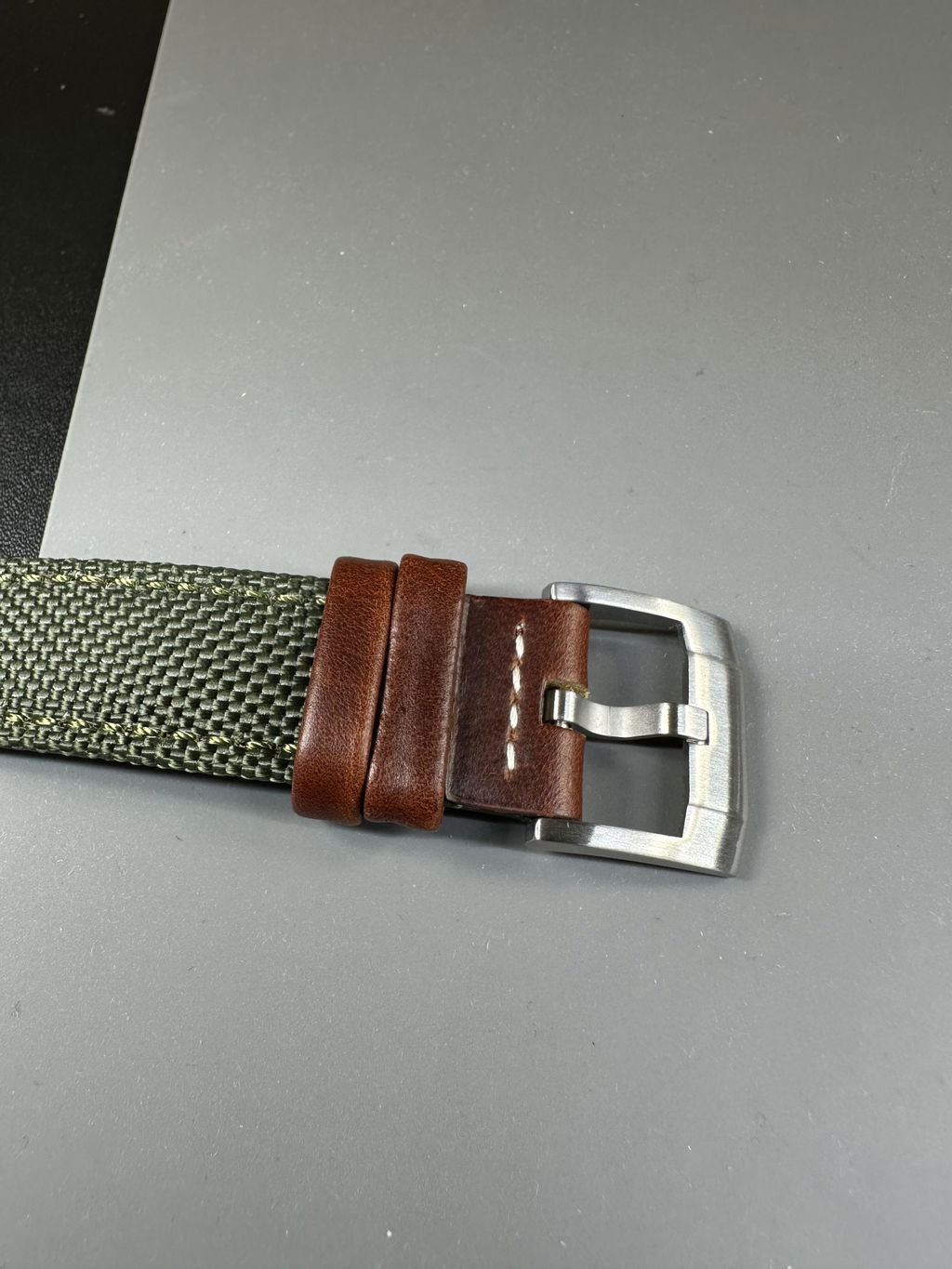
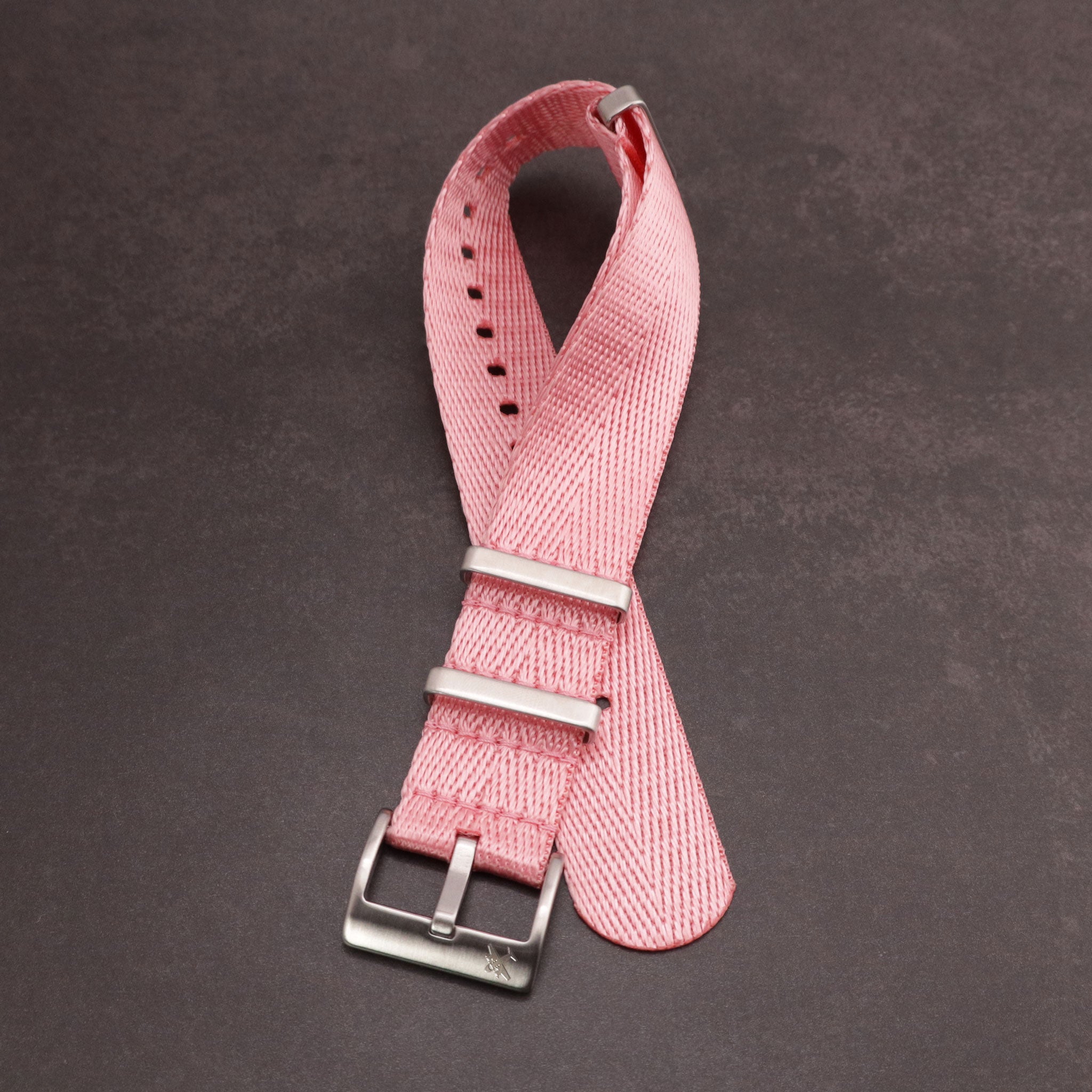
When you open your numbered Collector's Tin — the Betsy Ross-inspired commemorative box sealed with a gold foil sleeve — the polishing cloth is the first thing you see. It sets the tone for everything inside: the hand-stamped, individually numbered Patriot™ or Signer™ strap, the signed Certificate of Authenticity bearing its unique wax seal insignia, the 1776-engraved deployant buckle. The whole experience is designed to feel like opening something historic. Because we believe it is.

The Patriot™ honors the men and women who shouldered muskets and broke ground — the builders and fighters who made independence possible in blood and sacrifice. The Signer™ honors the fifty-six who put quill to parchment and staked everything on the power of words and conviction.
Only 1,776 numbered sets of each will ever be made. That is not a marketing number. That is the year the document was written. The year everything changed.
Two Hundred and Fifty Years Later
Nearly a decade ago, all four founders of Wrist Outfitters stood together in the darkened Rotunda of the National Archives — in silence, and in awe. Standing before words we could scarcely read on the aging parchment. And not because of the dim light.
The ink that once ran sharp and black across that calfskin parchment has softened to pale brown, and some signatures are barely legible. Time does that. Even to the most important things.
But the words have not faded. They have, if anything, grown louder — because every generation that has inherited this republic has had to decide, again, whether those words mean what they say. Whether the promise made in Philadelphia in the summer of 1776 is still worth keeping.
We believe it is. We believe it deeply. And we made the 1776 Signature™ Series for the people who believe it too.
The 1776 Signature™ Series ships June 22nd. Only 1,776 numbered sets of each strap will ever be produced. When they are gone, they are gone.
— Jeff Tobler, co-founder, Wrist Outfitters™
Sources & Further Reading
1. Declaration of Independence — Milestone Documents. U.S. National Archives and Records Administration. archives.gov
2. The Declaration of Independence. U.S. National Archives and Records Administration. archives.gov/founding-docs/declaration
3. The Declaration of Independence — Draft Copy. U.S. National Park Service. nps.gov
4. Physical History of the United States Declaration of Independence. Wikipedia, citing Julian P. Boyd, The Declaration of Independence: The Evolution of the Text (Library of Congress, 1943). wikipedia.org
5. Writing of the Declaration of Independence. HISTORY.com. history.com
6. How the Declaration of Independence Was Printed — and Protected. HISTORY.com. history.com
7. The Stone Engraving: Icon of the Declaration. Prologue Magazine, Vol. 35, No. 3, Fall 2003. U.S. National Archives. archives.gov — source for original parchment dimensions (approx. 24 x 30 inches).
8. The Final Declaration of Independence — Dunlap Broadside. Jefferson Papers, Princeton University. jeffersonpapers.princeton.edu — source for Dunlap Broadside dimensions and distribution details.
9. Dunlap Broadside. Library of Congress. loc.gov